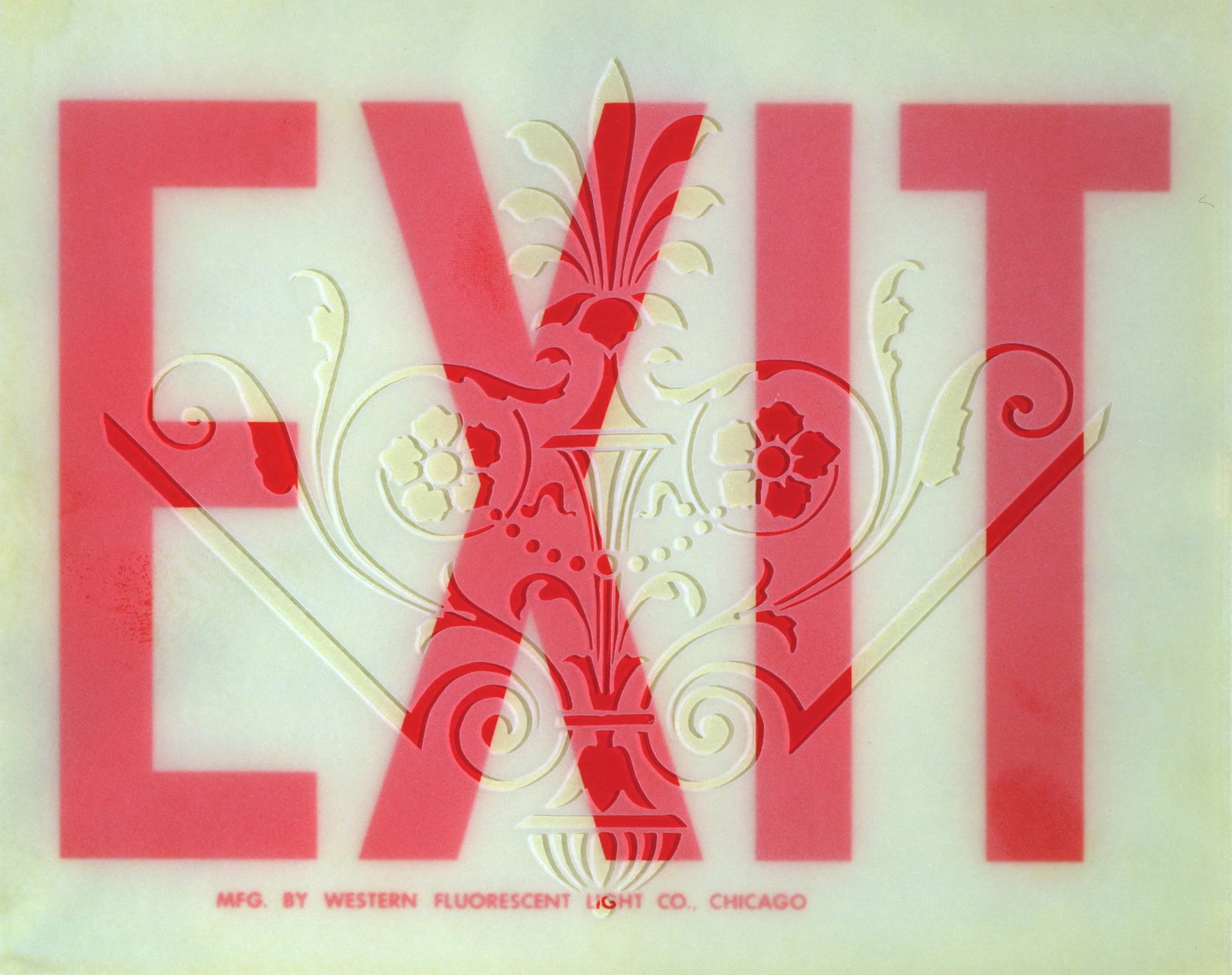
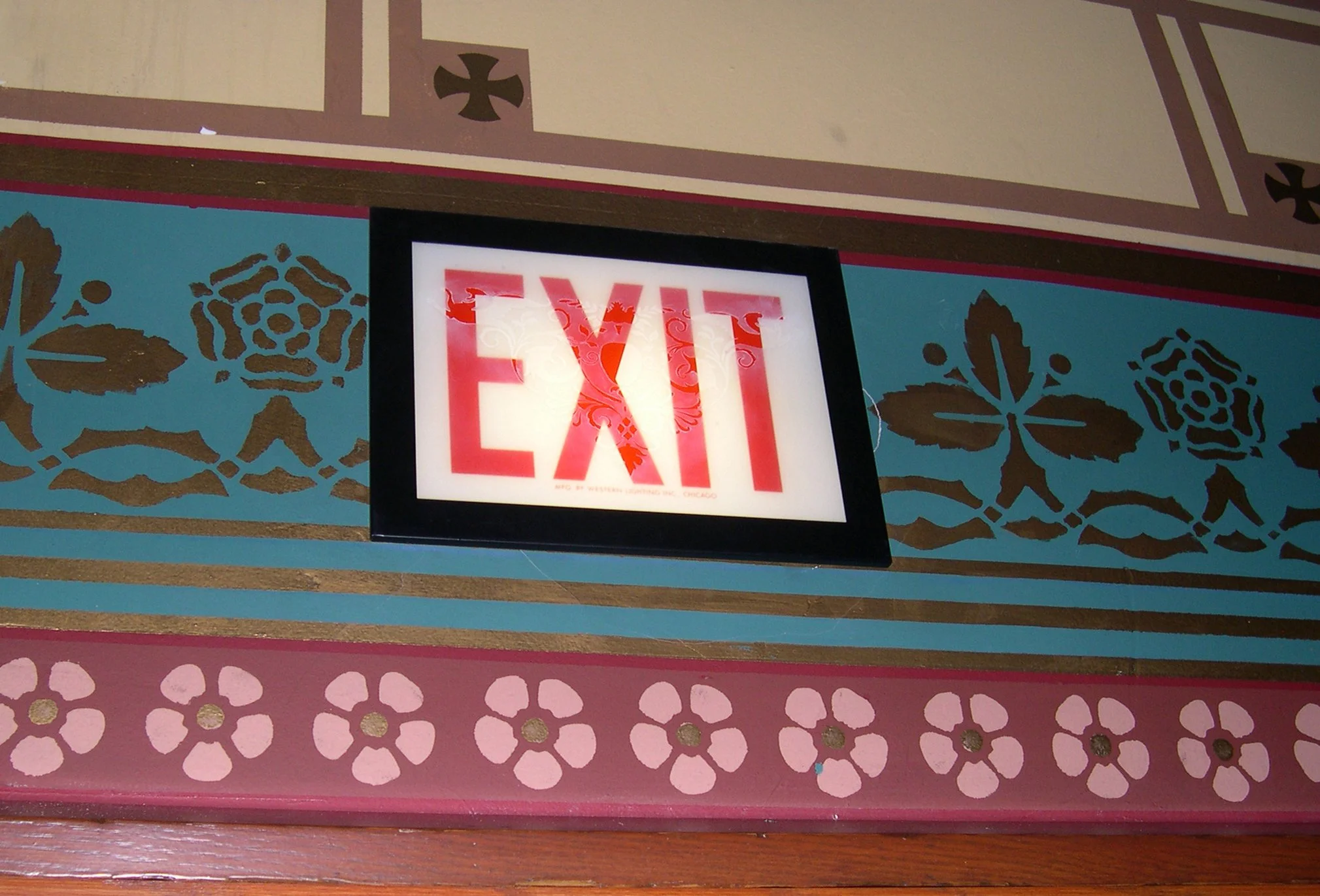
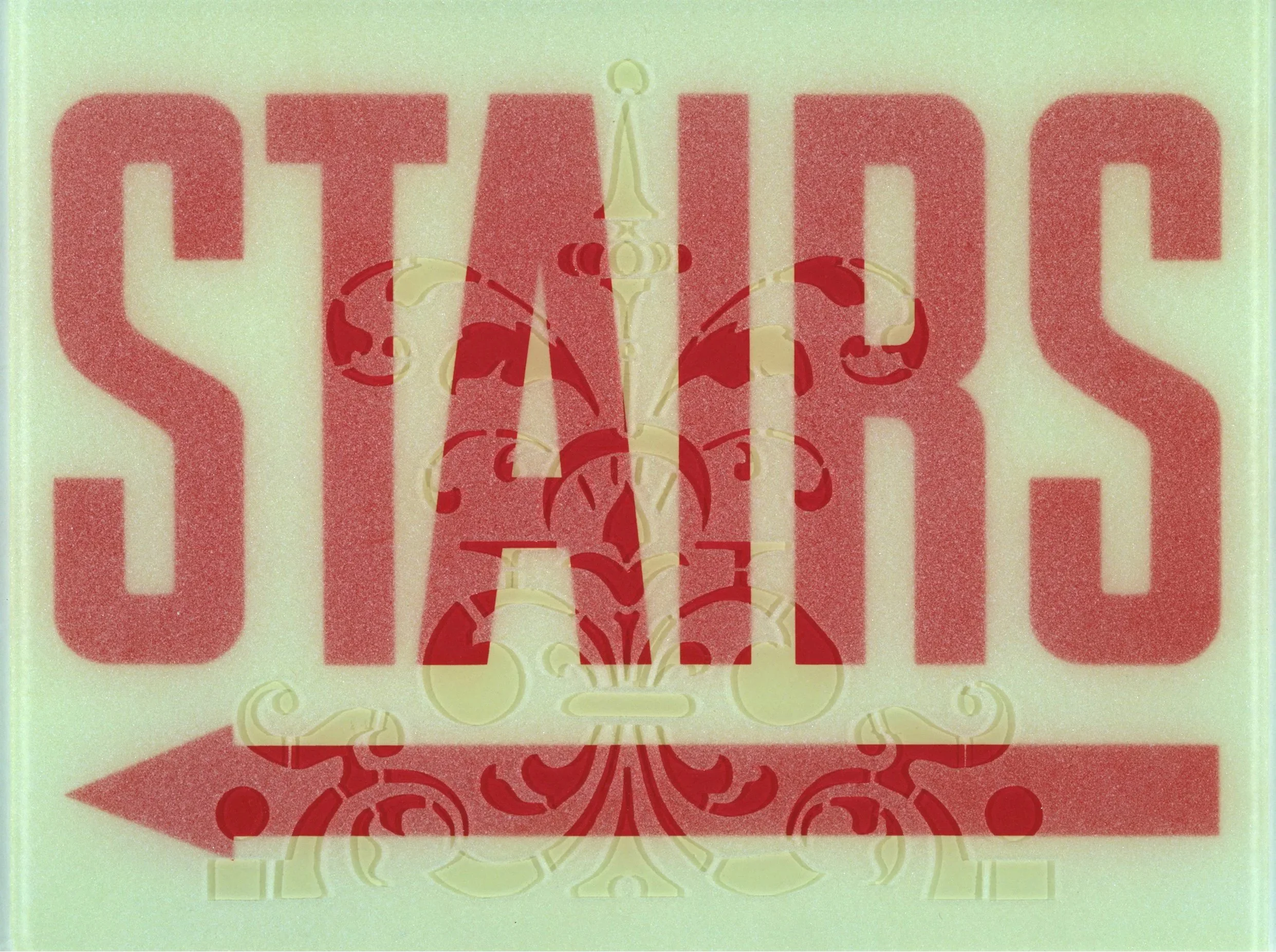
OUT (St. James Cathedral), 1997, sandblasted existing glass signage, 37 elements, 9” x 11” each, permanent installation at St. James Episcopal Cathedral, Chicago, Illinois.
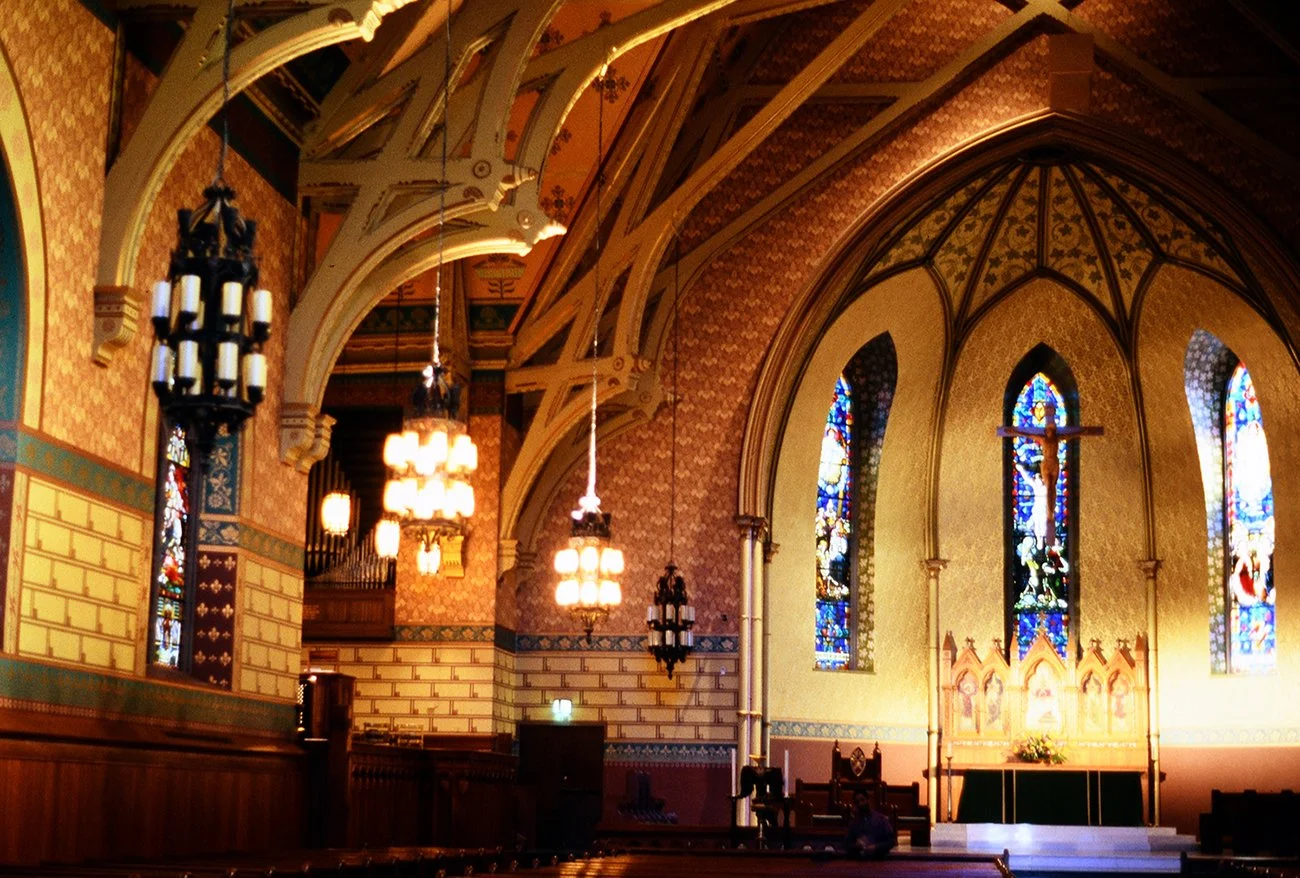
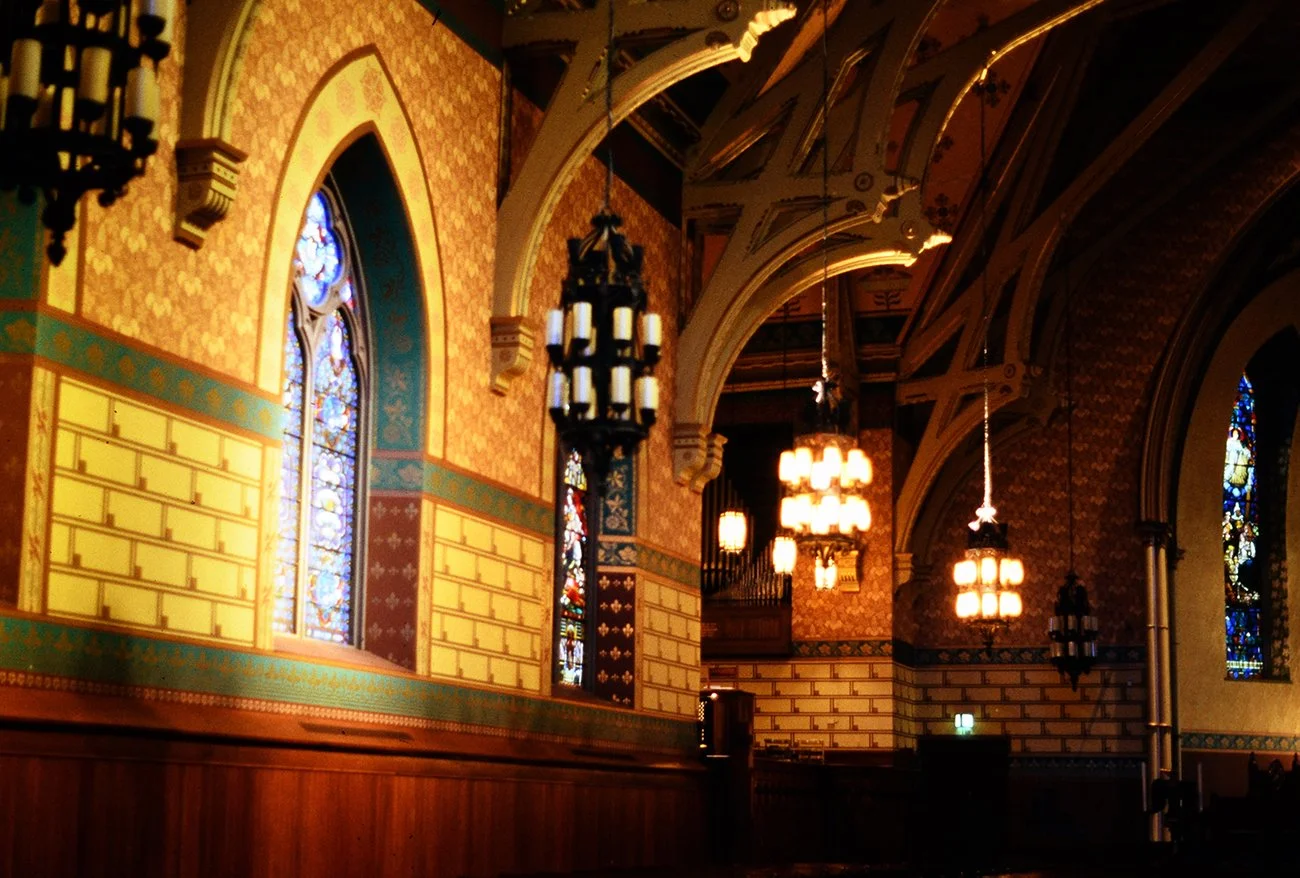
There is a long tradition of decorative art within the structure of ecclesiastical architecture. There are also, in the bureaucratically-laden society in which we live, an abundance of physical requirements that are applicable even to historic buildings such as St. James Cathedral. Thus we find a number of illuminated EXIT and other informational signs scattered throughout the interior of the Cathedral and its ancillary structures.
As a means of tying together the seemingly disparate elements that I have referenced above, I have carried out subtle additions to the informational signage in the Cathedral. These changes take the form of sandblasted patterning in the glass that overlays the text on each sign. It in no way obscures the legibility of these signs, and in fact is only readily discernible at close quarters. The effect is somewhat akin to an extremely diaphanous veil over a face or figure.
The title of the project, OUT, refers to the utilitarian aspect of the signs, which lead one out of the space, and also to the discrete nature of the alteration of these signs, which is almost out of sight, hovering at the periphery of one's perception.
AB
——————————
OUT - The EXIT Signs
For this project Adam Brooks worked with the Exit signs of the building complex. His stenciling and sandblasting created contrasting matte and reflective areas with which the external light plays, causing the detail to be more or less noticeable depending on light levels and the viewer's distance. This is a subtle project which itself has no overtly religious connotations and could as easily be installed in an entirely secular space.
What its site-specificity does, however, is twofold. On one hand it deals with the long tradition of hand-crafted items and artifacts within liturgical complexes. By manipulating the standard mass-produced signs, Brooks has bestowed upon them the state of being hand-wrought objects without violating their original integrity, rendering them gaudy, or breaking safety codes. Also, the extent of the installation, from the worship space of the Cathedral to the social and work spaces of the Diocesan center, creates a common aesthetic thread that gives the signs a new unity which underlines the unity of worship, work and life which is the purpose of this place.
Nathan Mason, project curator