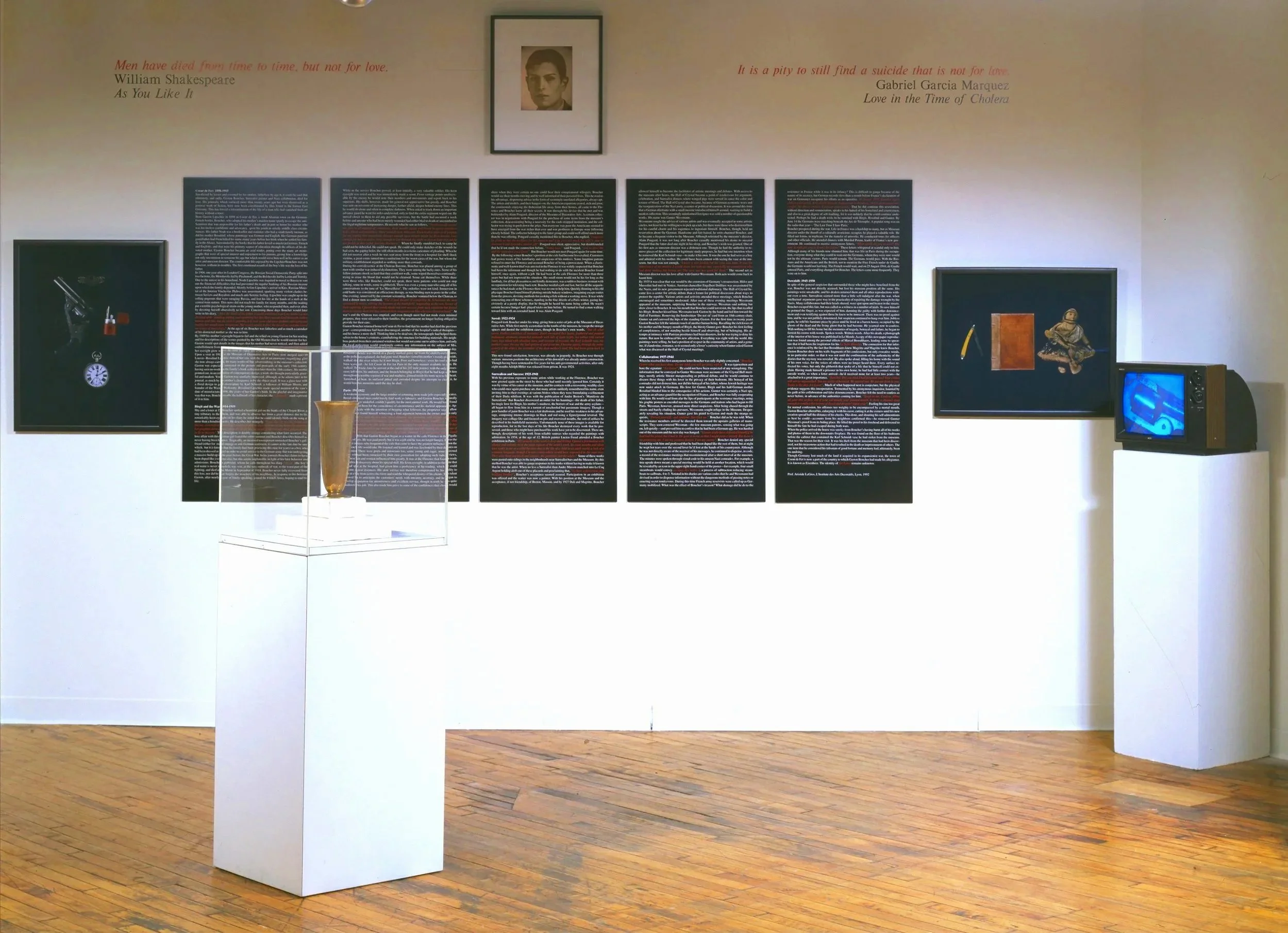
Sotto Voce; 2001; mixed media collaborative installation with Max King Cap, incorporating typeset text on panels, video, found objects, inkjet photographs, Polaroid photographs, vinyl presstype, printed booklet, dimensions variable, this installation at NIU Gallery, Chicago, as part of the Doppelganger exhibition.
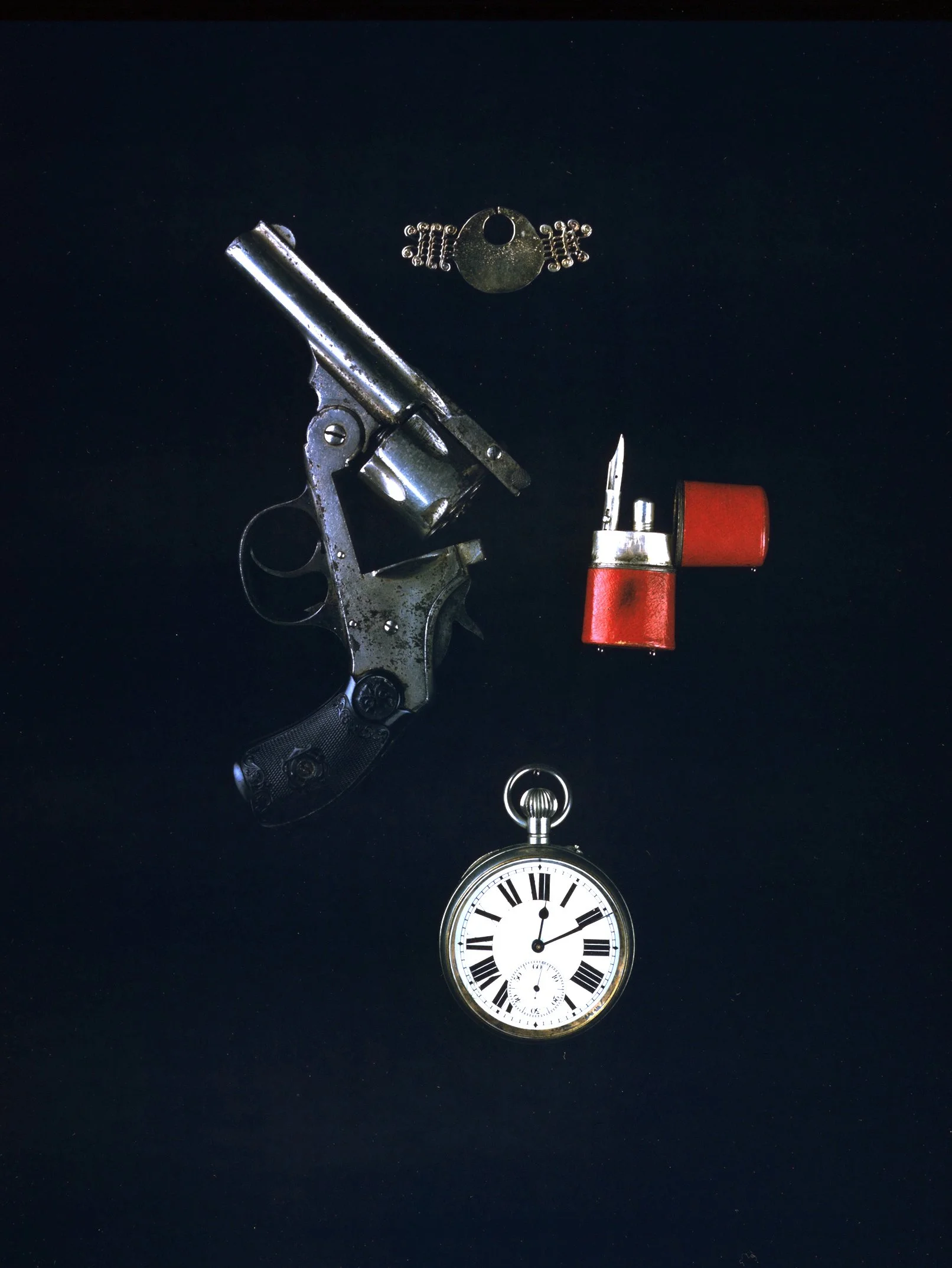
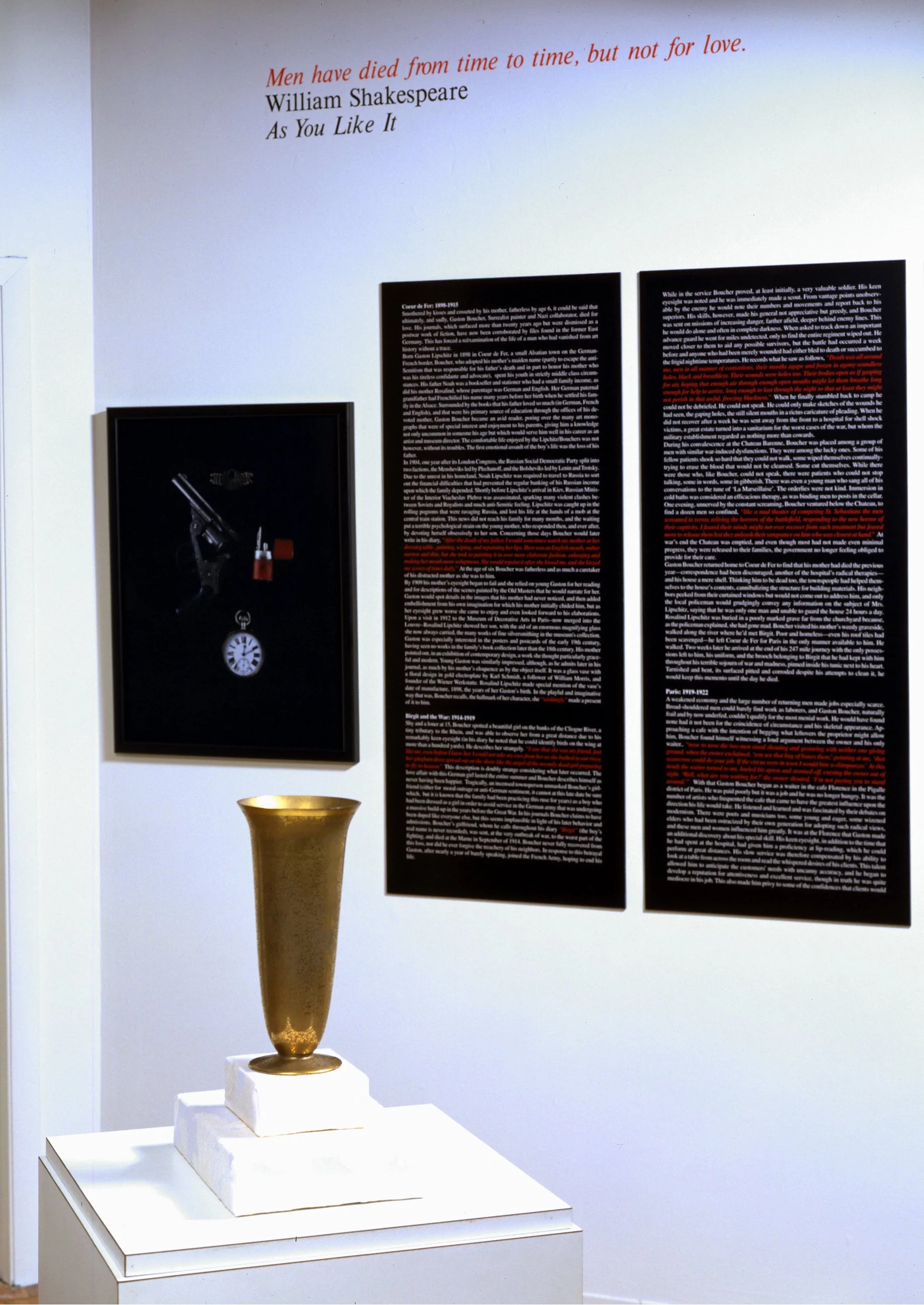
“In a collaborative project by Adam Brooks and Max King Cap, both artists remained decisively vague, disclosing minimal information about their intentions, process or finished product. Suggesting that their partnership resulted from a familiarity with and similarity between each others' work, the artists agreed upon symbolic objects that had "a narrative resonance for both artists," responding to and elaborating upon themes and issues present and placing them in a narrative context. To achieve this, the artists chose to switch studio spaces, a humorous and uncomfortable means of immersing themselves in the work and environment of the other. The resultant piece, Sotto Voce, is an intriguing installation that exists somewhere between fact and fiction, personal histories and merged identities, where the biographical information presented about a main character, Gaston Boucher, becomes as questionable as the existence of the character himself. Consisting of five text panels, a narrated video montage, several photographs and a carefully-protected gold vase, Sotto Voce both pays homage to and mocks the artifice involved in re-telling the story of the life of an individual. It seems that Boucher and his story, re-told here through typical museum-exhibition ephemera, become equivalents, both stand-ins for an actual life, both skewed through interpretation, regardless of whether or not either are real. Brooks claims Sotto Voce to be a work "by neither AND by both of us," that illustrates:
...A merging of our two sensibilities, esthetics, material proclivities and conceptual strategies. This method of reciprocal mind-reading brought standard connections but also elicited peculiar and unexpected results – similarities and coincidences the artists were unaware of their sharing, ambivalent positions that defied professed logics and ideals, and, most disturbingly, the reconcilability, no matter the number of visions and beliefs shared, of two citizens whose exterior lives, while statistical mirror images, so differ, that their interior lives, even when revealed and sincerely offered, remained to each other foreign and un-navigable lands."
Julie Charmelo, curator’s essay in the catalog for Doppelganger, December 2000